
Carbon Simulation & Reduction Lab
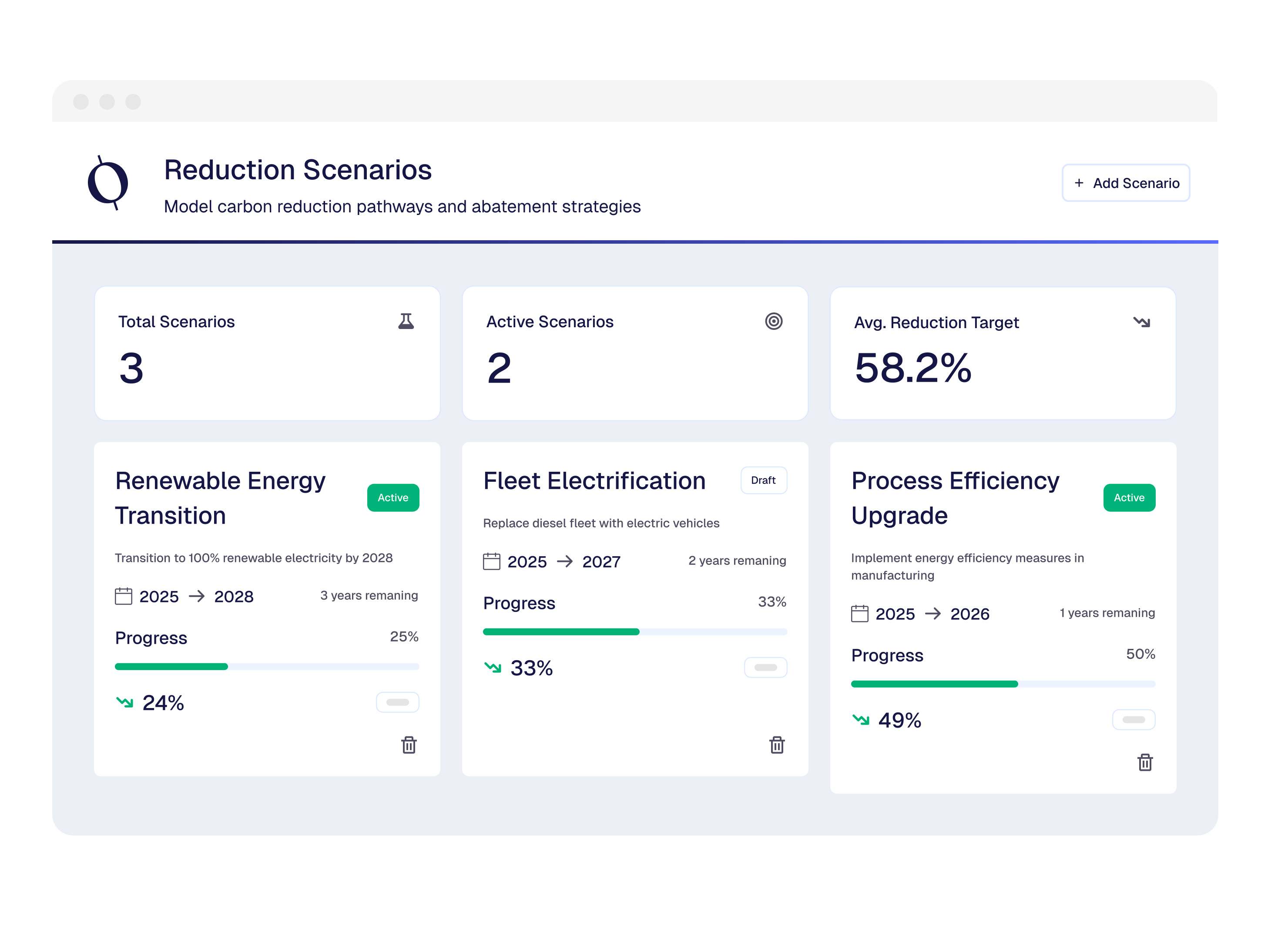

Carbon Simulation & Reduction Lab is a CCAS™ sub-module that helps you visualize your company’s emissions in the coming years and model potential reduction scenarios. Using the carbon data generated within Carbonance Carbon Accounting Solutions (CCAS™), it compares the impact of different actions (energy efficiency, renewable energy, fuel switching, etc.) on emissions and quantifies your net-zero roadmap with clear, numeric outputs.



Define the Baseline Emissions
Using corporate and product-level carbon data in CCAS™, the base year or current-year emissions level is selected.

Define Targets and Timeline
Mid- and long-term emissions targets (e.g., 2030, 2040, 2050) and the years used to track progress toward those targets are defined.

Create Reduction Options
Actions such as energy efficiency projects, renewable energy investments, fuel switches, or supplier-side initiatives are added as scenarios; for each, expected impact and baseline cost information is defined.

Run and Compare Scenarios
Selected scenarios are executed with the Emission Simulation Engine; the emissions trajectory and alignment with targets are compared via charts through the Reduction Scenario Visualizer.

Save and Share the Net-Zero Roadmap
Based on the selected scenario, a year-by-year reduction plan is created in the Net-Zero Pathway Designer; results are exported for internal management, bank meetings, or sustainability reporting.
Turns your emissions targets from a pledge into a quantified plan, showing where you need to be in each year.
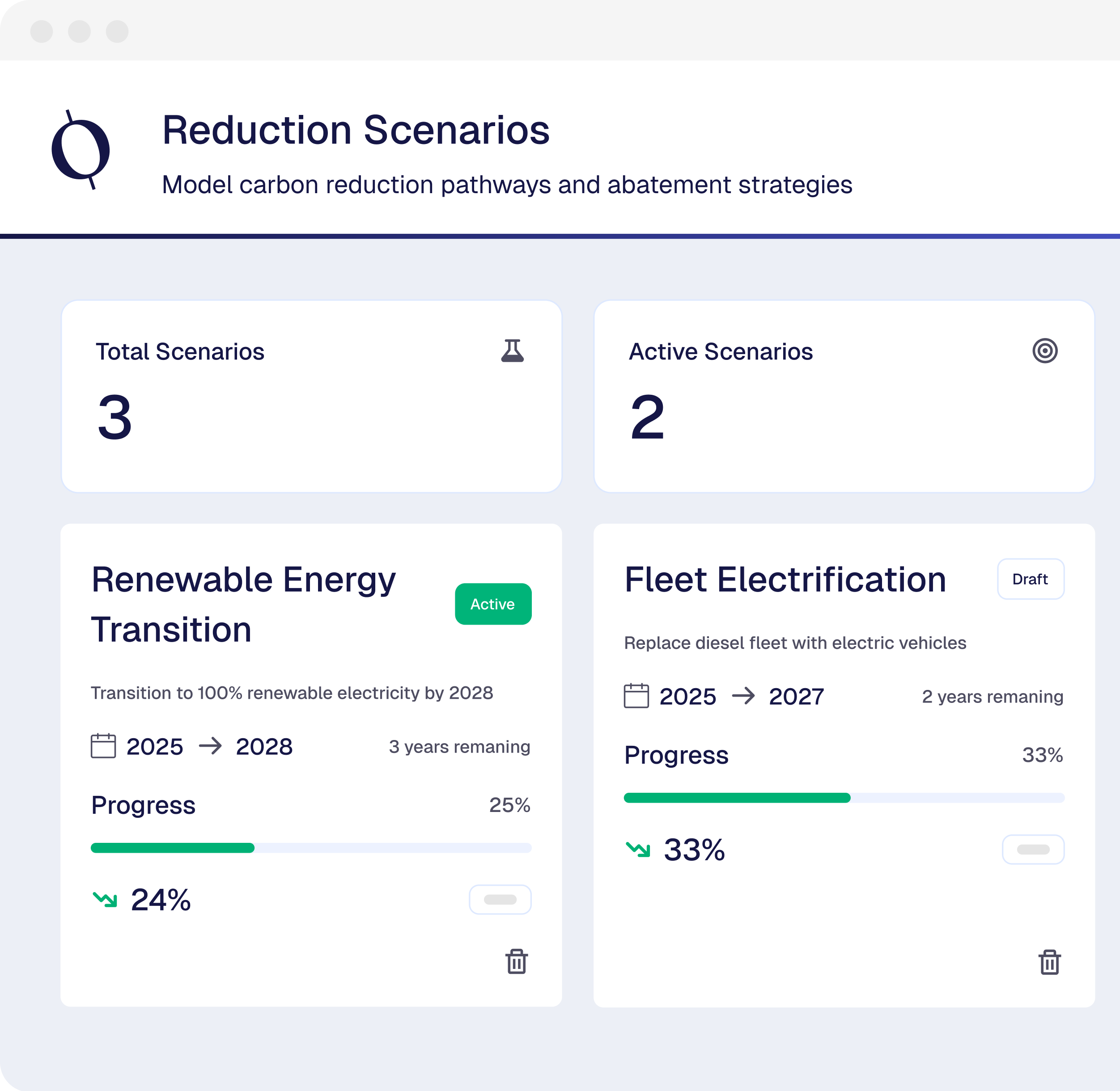
Lets you see the impact of different projects and scenarios on emissions side-by-side through charts and summary screens.
By viewing expected emissions reductions together with baseline cost information for each step, you can assess which actions are more efficient.
Uses corporate inventory and product-level carbon data to keep measurement and reduction planning within the same framework.
Shows how you will reach net-zero or interim targets with a year-by-year roadmap and visuals, helping you build a strong narrative in financing discussions.
At what stage should we use this module?
We recommend first creating your baseline carbon inventory. Once your corporate data, and ideally your product level data, is ready, this module can be used to model reduction scenarios for future years.
Which data is mandatory, what can’t it work without?
You need base year or current year emissions data, a breakdown by facility or business unit, and core assumptions about the reduction actions you plan to implement. Most of this information is typically already produced in other CCAS™ modules.
How “certain” should the results be considered?
This module is a scenario and planning tool. Results are calculated based on the assumptions entered and the reduction actions selected. It supports decision making and should not be treated as a precise forecast.
How is it used in discussions with banks or investors?
The target emissions level, the actions that lead to that target, and the expected trajectory year by year can be shown in a single view, so both the current status and the planned reduction pathway are shared clearly.
Do we need a climate or carbon expert to use this module?
No. It can be used easily by a sustainability team or a finance team that is familiar with the core concepts. Teams that want to build more advanced scenarios can deepen the analysis by defining their assumptions and reduction projects in more detail.


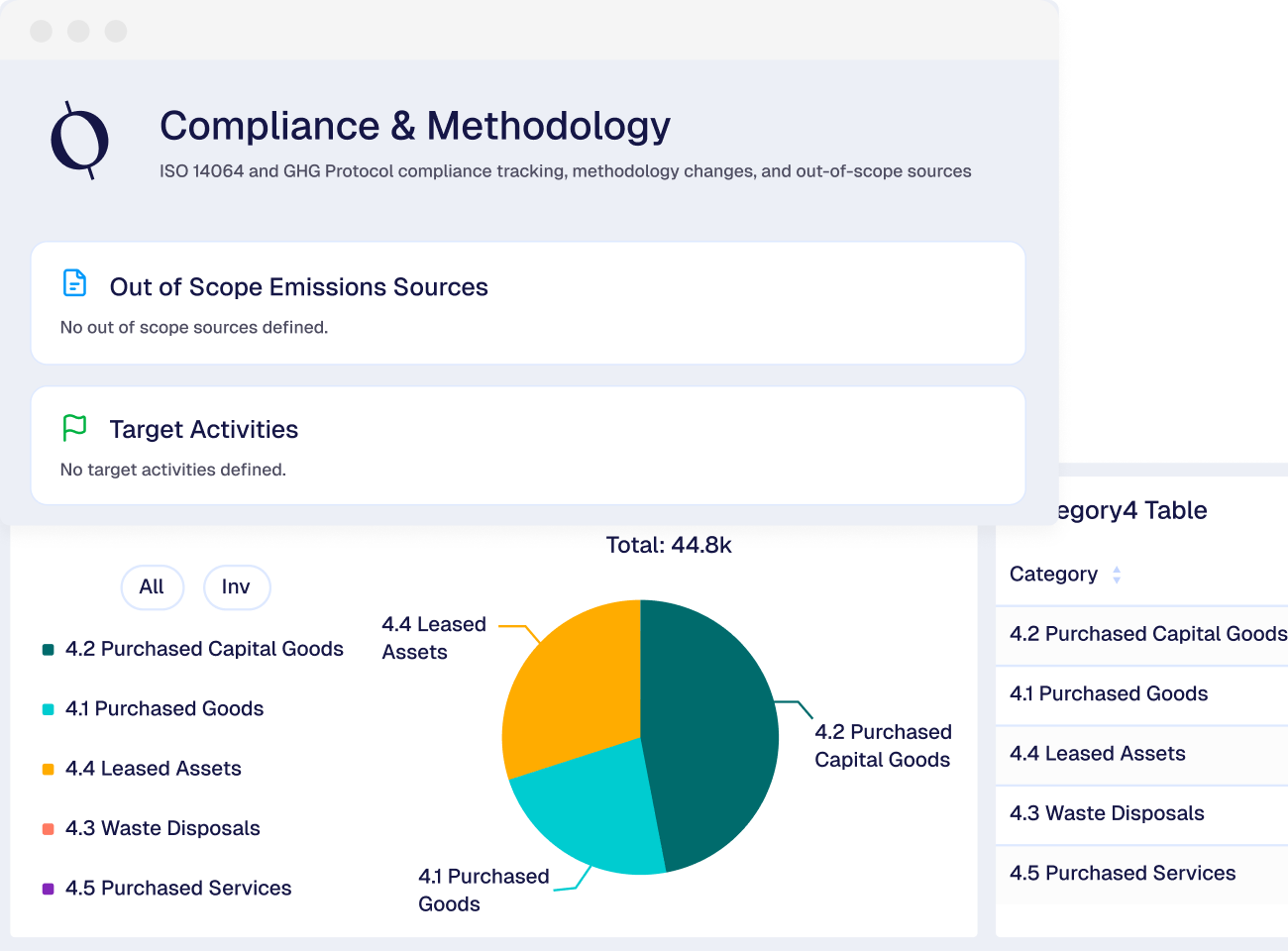
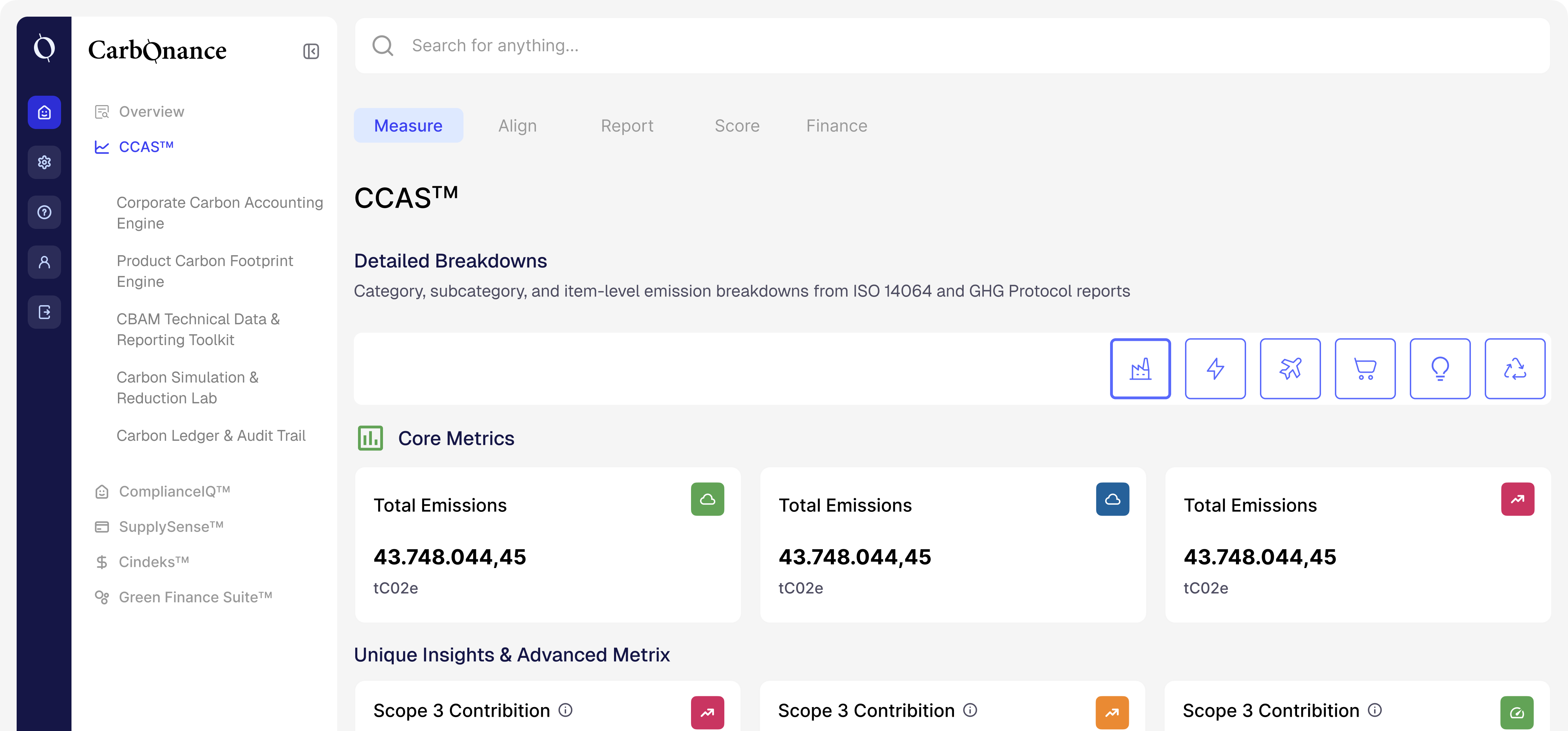
Corporate Carbon Accounting Engine
The Corporate Carbon Accounting module calculates companies’ Scope 1–2–3 emissions in accordance with the GHG Protocol and ISO 14064.

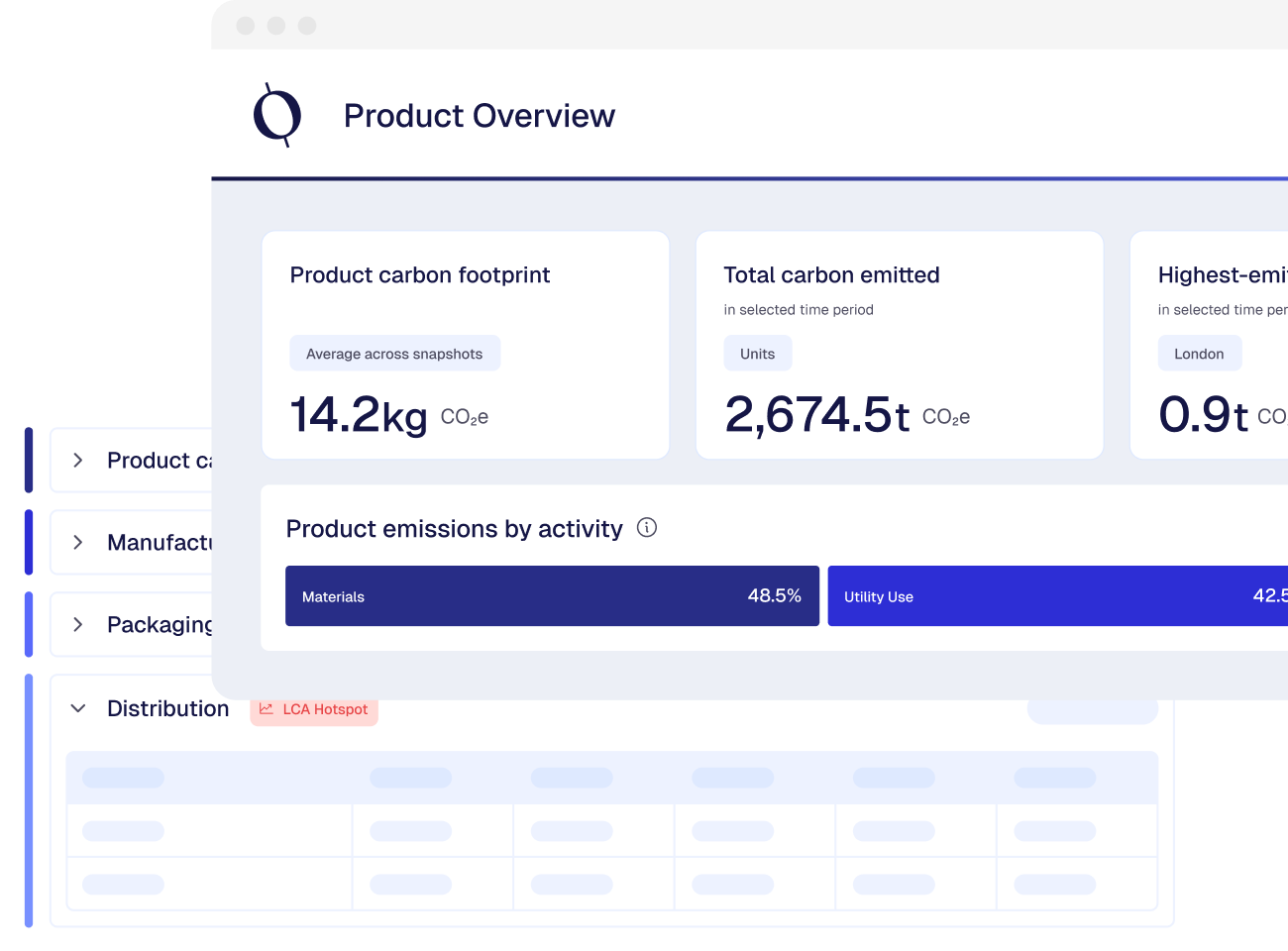
Product Carbon Footprint Engine
The Carbon Footprint Calculator calculates the carbon footprint of your products and provides a net CO₂e value.
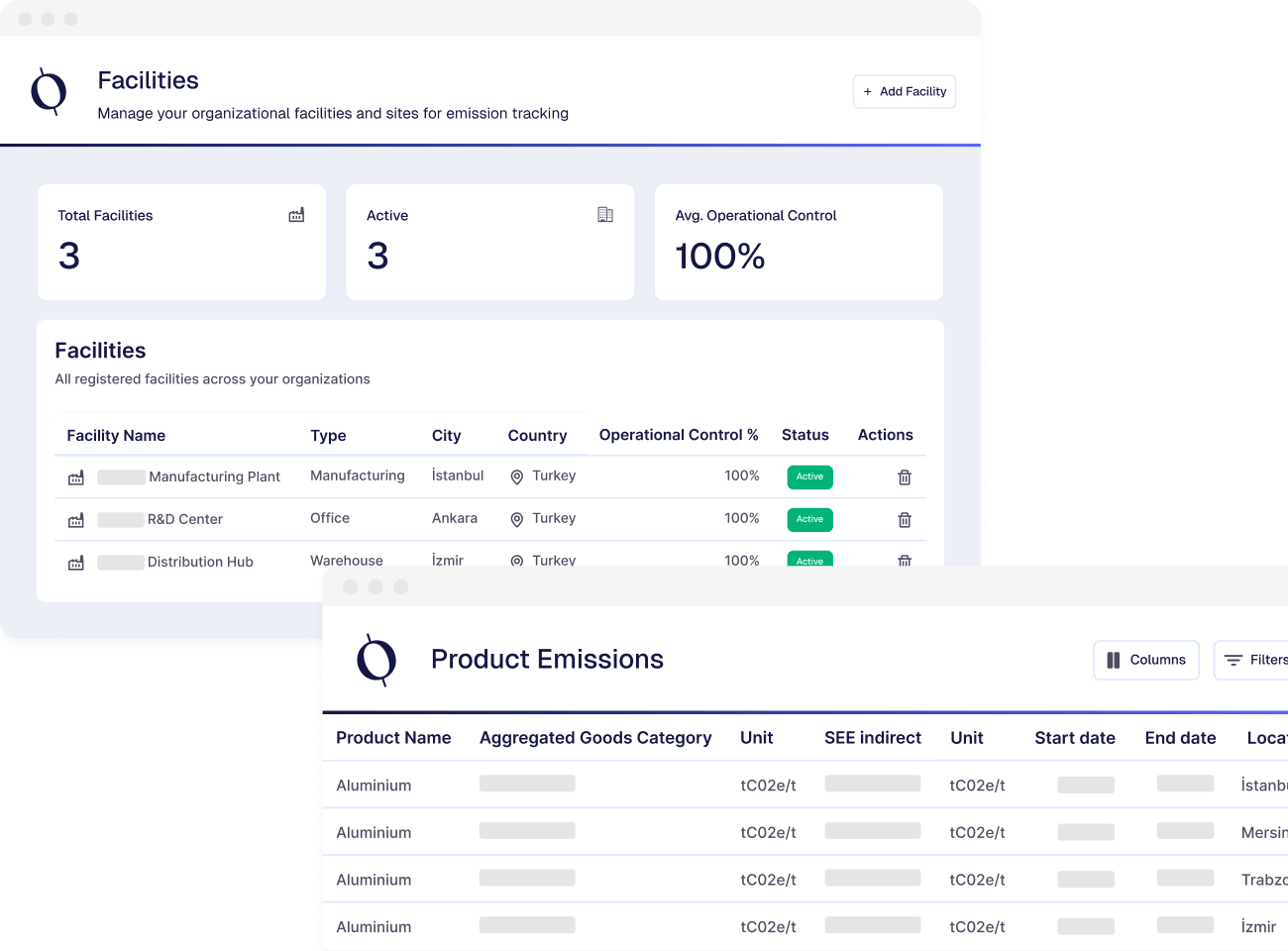
CBAM Technical Data & Reporting Toolkit
The CBAM Data & Reporting Toolkit helps companies that export to the EU prepare emissions data and reports.
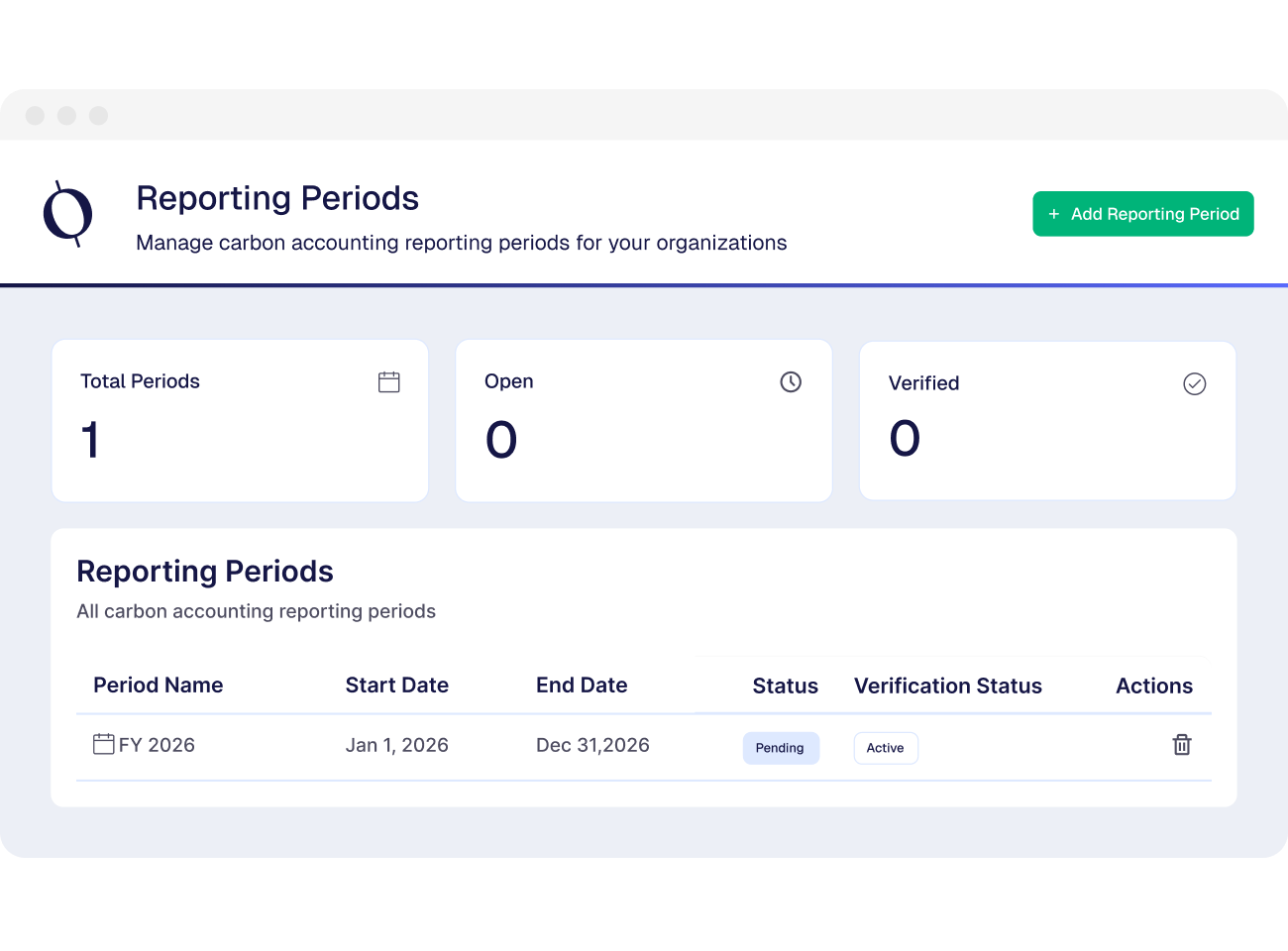
Carbon Ledger & Audit Trail
Carbon Ledger & Audit Trail is a CCAS™ submodule that provides a reliable recording and tracking infrastructure for your company’s carbon data.